Many companies know where they want to go, but don't have a clear picture of how to get there. Ideas and goals often go nowhere and are not realized because they lack a clear plan. One management model that can help design actionable and executable plans is OGSM.
This article explains what is the meaning behind these four letters, how the OGSM model works and what OGSM and OKRs have to do with each other.
- Four letters, one plan: OGSM stands for Objectives, Goals, Strategies and Measures, a top-down framework that turns a long-term vision into a one-page strategic plan.
- Built for the long view: OGSMs are typically set annually or for three to five years, which makes them less suitable for companies that need to pivot quickly.
- Top-down by design: Leadership sets the company OGSM and departments build their own plans under it; teams adjust actions at the quarterly reviews, while the objective and goals come from the level above.
- OGSM plus OKRs: Combining a long-horizon OGSM with quarterly OKRs adds the agility, transparency and team-level autonomy that OGSM alone lacks.
What to expect:
- What is OGSM? Definition
- The 4 elements of OGSM
- How does the OGSM framework work? 5 steps
- What does the OGSM model offer? Advantages and disadvantages
- OGSM vs. OKR: What is the difference?
- OGSM and OKRs – still a good combination?
- Conclusion: long-term planning with OGSM, short-term flexibility with OKRs
- OGSM model – FAQ
What is OGSM? Definition
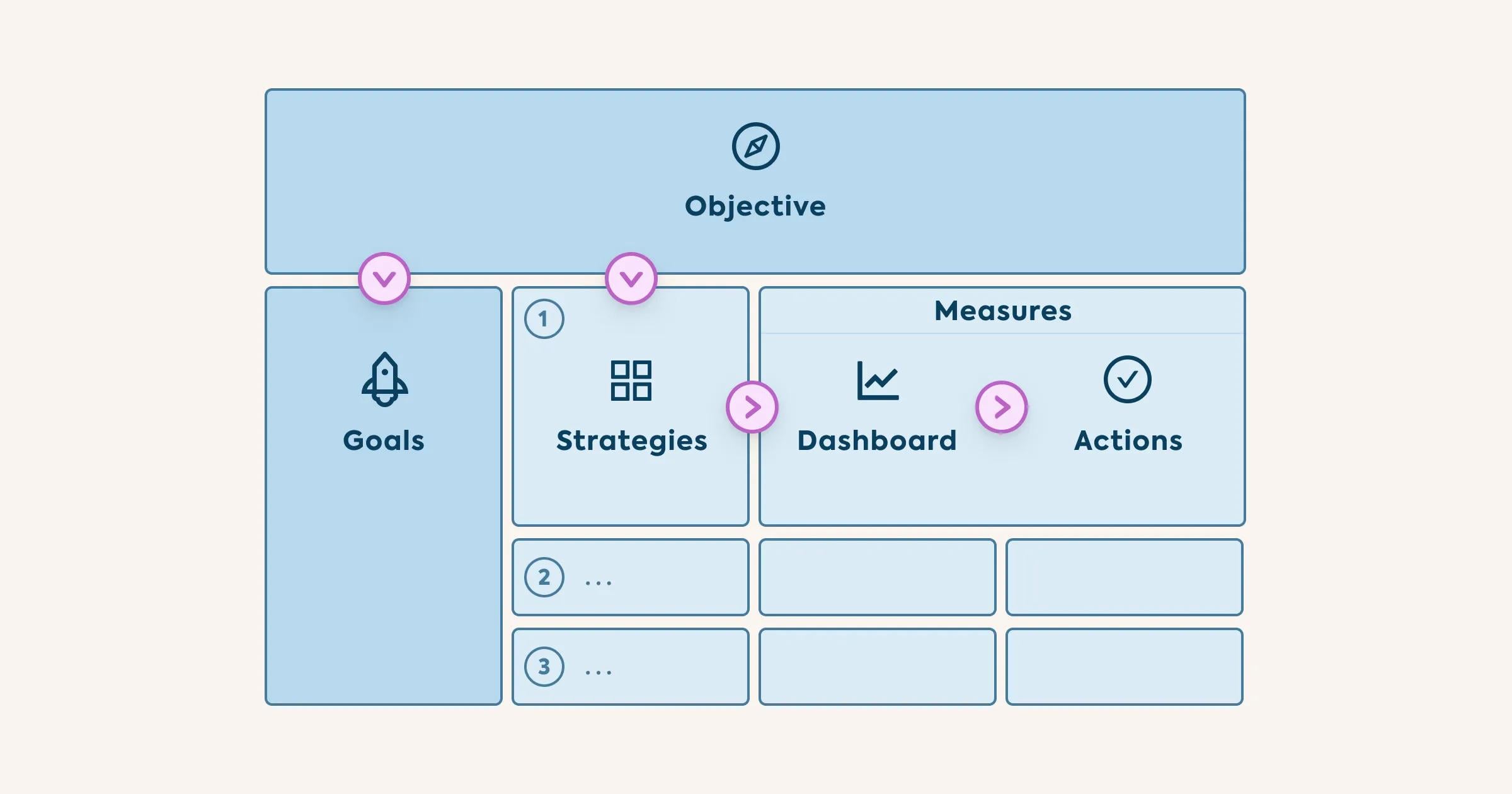
The abbreviation “OGSM” stands for “Objectives, Goals, Strategies and Measures”. In combination, these four elements form a world class strategy model and widely used framework that can help companies transform their vision into an actionable business model and strategy.
OGSM helps organizations define what they want to achieve and break down how exactly they will accomplish that goal.
Overarching long-term objectives are identified and translated into clear, measurable goals. It also outlines actionable strategies to achieve those goals and develops measures to track progress toward achieving them.
The executive team sets the company-level objective and goals, which stay the same as the plan cascades; each department then writes its own strategies, measures and action plans under them (Cascade, 2025).
The 4 elements of OGSM
The OGSM model consists of four core elements:
- Objectives are qualitative long-term goals set by management. They are intended to inspire and indicate an organization's vision, i.e. where an organization wants to be in one, three or five years.
- Goals are used to define success. They specify what actually needs to be accomplished in order to meet the desired objective.
- Strategies name the three to five key choices for how the goals will be reached (OGSM.com, 2025).
- Measures come in two parts: dashboard metrics (KPIs) that show whether each strategy is working, and actions, specific projects that carry a strategy out, each with an owner and a deadline (OGSM.com, 2025).
So, strategy development using the OGSM framework answers the following four questions:
- In what direction is the company moving?
- What will it look like when we get there?
- In what way will we get to the destination?
- How do we know we are on the right track?
How does the OGSM framework work? 5 steps
Although the OGSM model can be broken down to four core elements, its implementation in the organization takes place in five steps:
1. Define the objective
The OGSM planning process always starts by setting an inspiring main objective. The statement describes a company's mission and long term visions. To ensure that all team members understand it, the objective should be formulated as clearly and concisely as possible, and should get to the heart of what is to be achieved and how it is to be achieved.
An example: For an automobile manufacturer, an effective objective statement could read: We will become the global market leader in the production of electric vehicles by focusing on state-of-the-art battery technology, high-performance motors and an innovative mindset.
2. Select goals
Once the main goal is in place, the next step of OGSM defines success. Here, the focus is on what is needed to quantify what success looks like or what results need to be achieved to realize the overall objective. Usually, three to five medium term business goals are defined for this purpose.
💡 Tip: When formulating the goals, make sure that they are as SMART as possible – i.e., specific, measurable, achievable, realistic, and time-bound. You can read more about how exactly the SMART goals method works on our blog.
3. Develop strategies
The next step is to consider precisely how the goals can be achieved. What specific steps are needed to get to the goal? Usually three to five strategies are written down for the plan as a whole.
Please note: Even though the “S” in OGSM stands for strategies, it means something different at this point than the general term “strategy” in the sense of an overarching plan.
4. Identify measures
Next, identify and define quantifiable success metrics that can be used to visualize whether the strategies are successful. This usually works through KPIs that measure the success of the strategies within a defined time frame. What these look like depends on the strategies you are trying to implement.
In any case, the metrics should:
- be quantitative and show a trend.
- be easily traceable.
- be accepted as a good metric by all stakeholders.
Depending on whether the assessment then shows that expectations are being met, exceeded, or undercut, strategic planning should be adjusted.
5. Launch actions
This step completes the M: break each strategy into concrete actions, each with the resources it needs, an owner and a deadline, so every team knows what it has to do. This step is quite essential when it comes to putting the developed plan into action.
What does the OGSM model offer? Advantages and disadvantages
The OGSM framework links strategic planning with concrete actions. As such, it offers several advantages:
- ✔️ OGSM results in a clear, simple, one-page plan that is understood at all levels of an organization.
- ✔️ Objectives are directly linked to actions and measures in the OGSM model. This increases the likelihood of actually achieving them.
- ✔️ OGSM is suitable for all types of strategic plans, regardless of the size of the organization, project or team.
At the same time, OGSM does come with some challenges. These are the biggest drawbacks of the framework:
- ❌ OGSM is focused on long-term goals. The basis of the plan usually holds for a year, and the quarterly reviews adjust its actions. This makes OGSM less suitable for companies that have to react frequently and quickly to changes (external to the market or within the company).
- ❌ OGSM focuses on the “big picture”. Accordingly, there is a risk that strategies are too broad and that what is really important is not measured.
- ❌ OGSM is built top-down: leadership sets the objective and goals, which stay the same as the plan cascades, so teams shape their own strategies, measures and actions but not the goals. OGSM relies on strong leadership.
OGSM vs. OKR: What is the difference?
Another management method that also works with clear targets and uses partly similar wording as OGSM is OKR – short for “Objectives and Key Results”.
💡 Tip: If you want to refresh your knowledge of OKRs at this point before moving on, it's best to take a look at our OKR guide.
However, as similar as the terminologies are, the two frameworks function very differently at some points.
Specifically, OKRs and OGSM have the following 🤝 similarities and ⚡ differences:
- 🤝 Focus: Both frameworks specify what is to be achieved and how to get there.
- ⚡ Direction: In OGSM, the objective and goals are set at the top, and each department writes its own strategies, measures and actions under them. OKRs combine leadership's priorities with key results that teams propose.
- ⚡ Cadence: An OGSM cycle usually lasts 12 months, with an objective that looks three to five years ahead, and the plan is reviewed quarterly to measure progress and adjust actions (OGSM.com, 2025). OKRs are set for three to four months and tracked in regular weekly check-ins.
- ⚡ Access: The company OGSM is drafted by leadership, ideally with the team involved for support and ownership, as OGSM.com recommends, and shared as a one-page plan. OKRs are usually drafted in the open, team by team, and visible to everyone.
- 🤝 Action orientation: Both frameworks connect goals to concrete work. In OGSM, actions with an owner and a deadline are part of the Measures; OKRs can easily be expanded to include initiatives.
- ⚡ Ambition: OGSM.com asks for SMART goals, and the A stands for achievable. OKRs separate committed OKRs, which teams agree to achieve in full, from aspirational ones, which have an expected average score of 0.7 in Google's OKR playbook. With OKRs, failure is seen as an opportunity to learn and grow. OGSM also sets ambitious goals, but expects them to be achievable nonetheless.
- ⚡ Leadership: In OGSM, the plan is reviewed in annual or biannual strategic reviews with leadership and in monthly or quarterly review meetings with the strategy owners (Cascade, 2025). With OKRs, leaders set the priorities and coach teams that propose their own key results. They focus on the potential of their employees.
- ⚡ Adaptability: An OGSM's basis usually holds for the year and is tightened from cycle to cycle, while the quarterly reviews adjust its actions. OKRs, on the other hand, are very flexible, are usually prepared on a quarterly basis, and are checked regularly.
OGSM and OKRs – still a good combination?
Despite or perhaps because of all these differences, OKRs can be a useful complement to the OGSM model. Used together, OKRs within a more long-term OGSM planning framework provide the ability to place temporary emphasis on specific issues or goals and to focus on specific strategies for a short period of time with additional OKRs.
OKRs also add a bottom-up layer that OGSM leaves to the top: teams propose their own key results within the company's goals, which shifts the focus toward autonomy, alignment and collaboration.
Combined this way, OGSM and OKRs give organizations the opportunity to keep long-term goals and metrics in mind, while still remaining flexible and adaptable along the way, empowering their employees and providing a contemporary way of working.
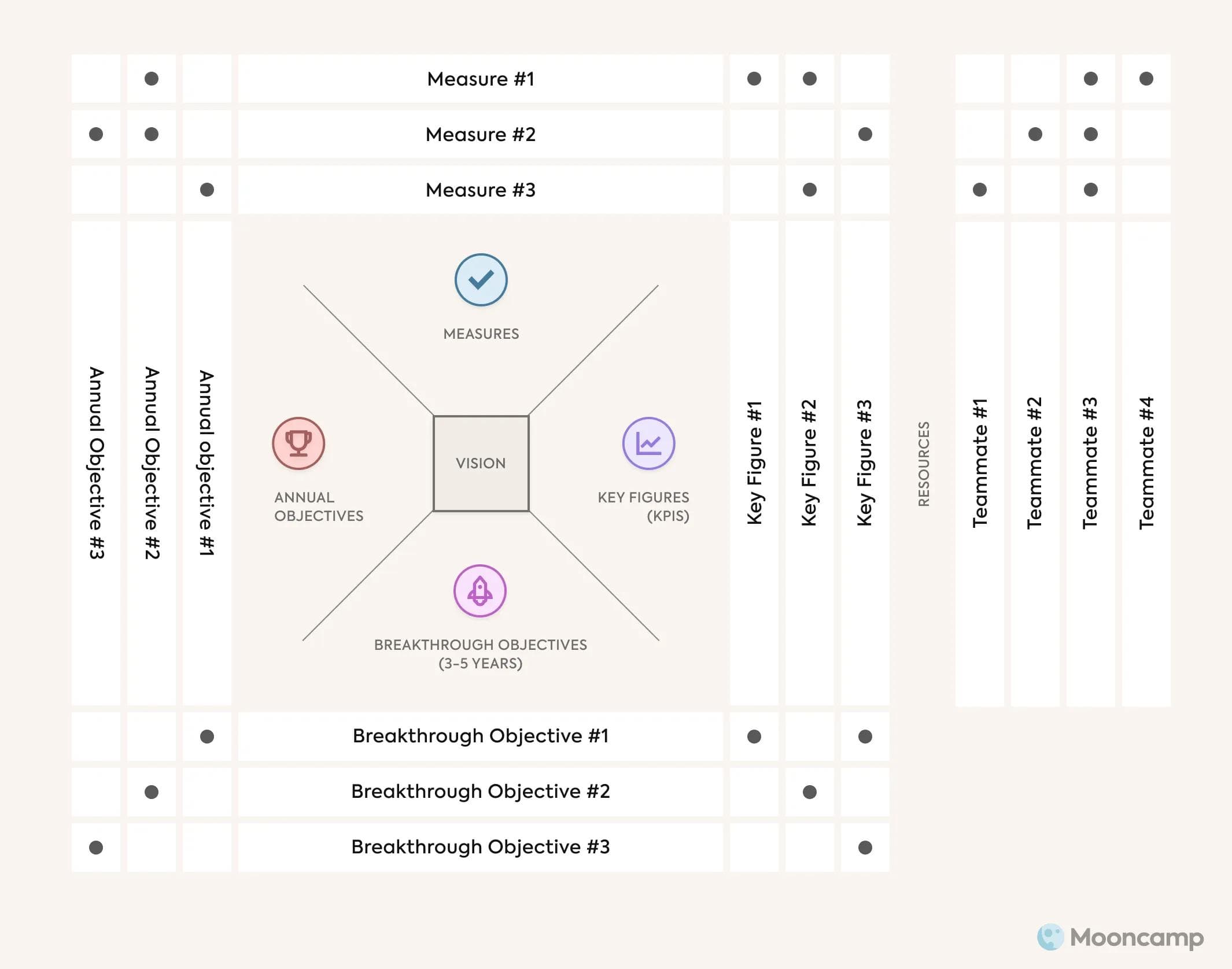
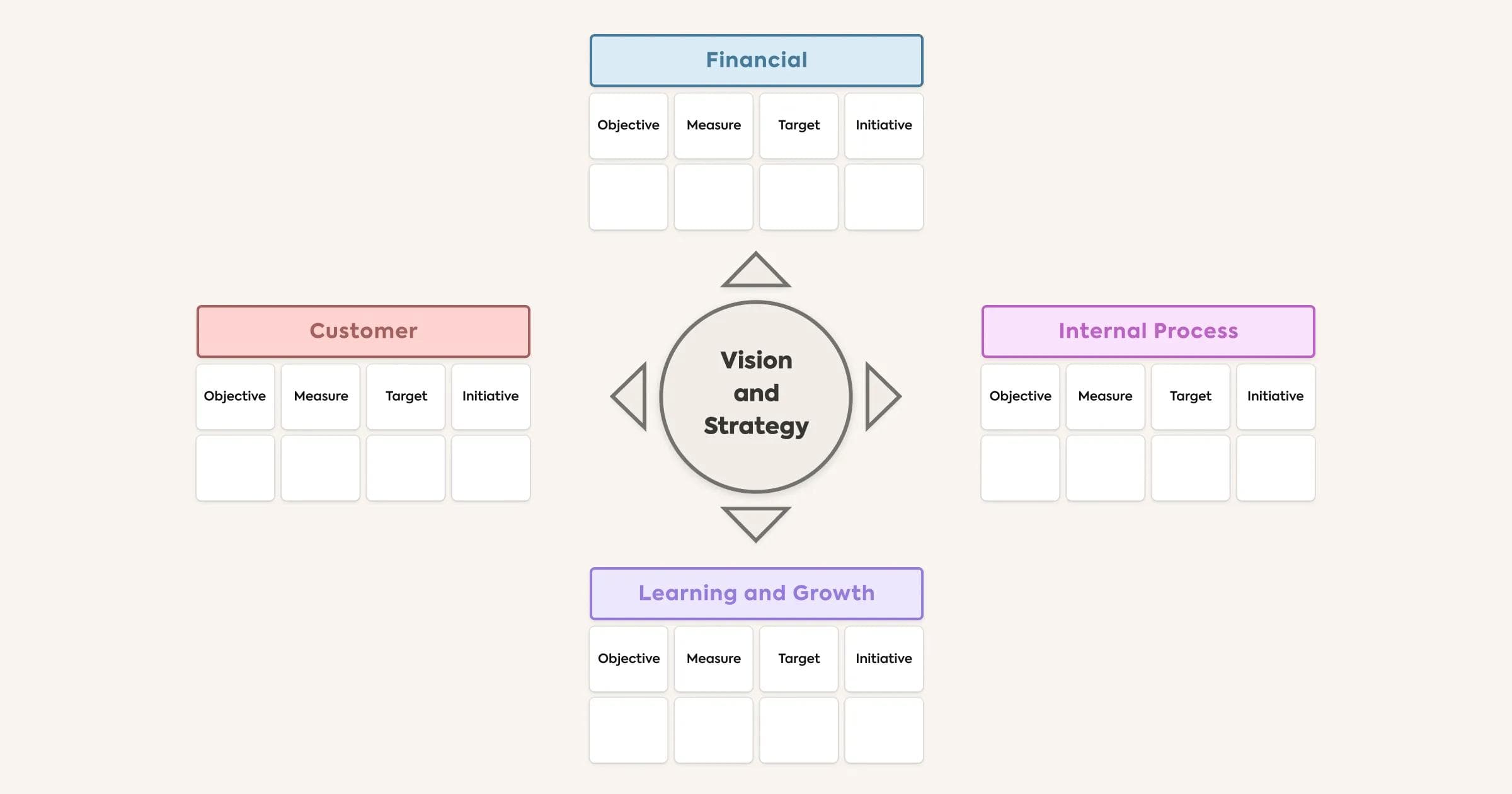
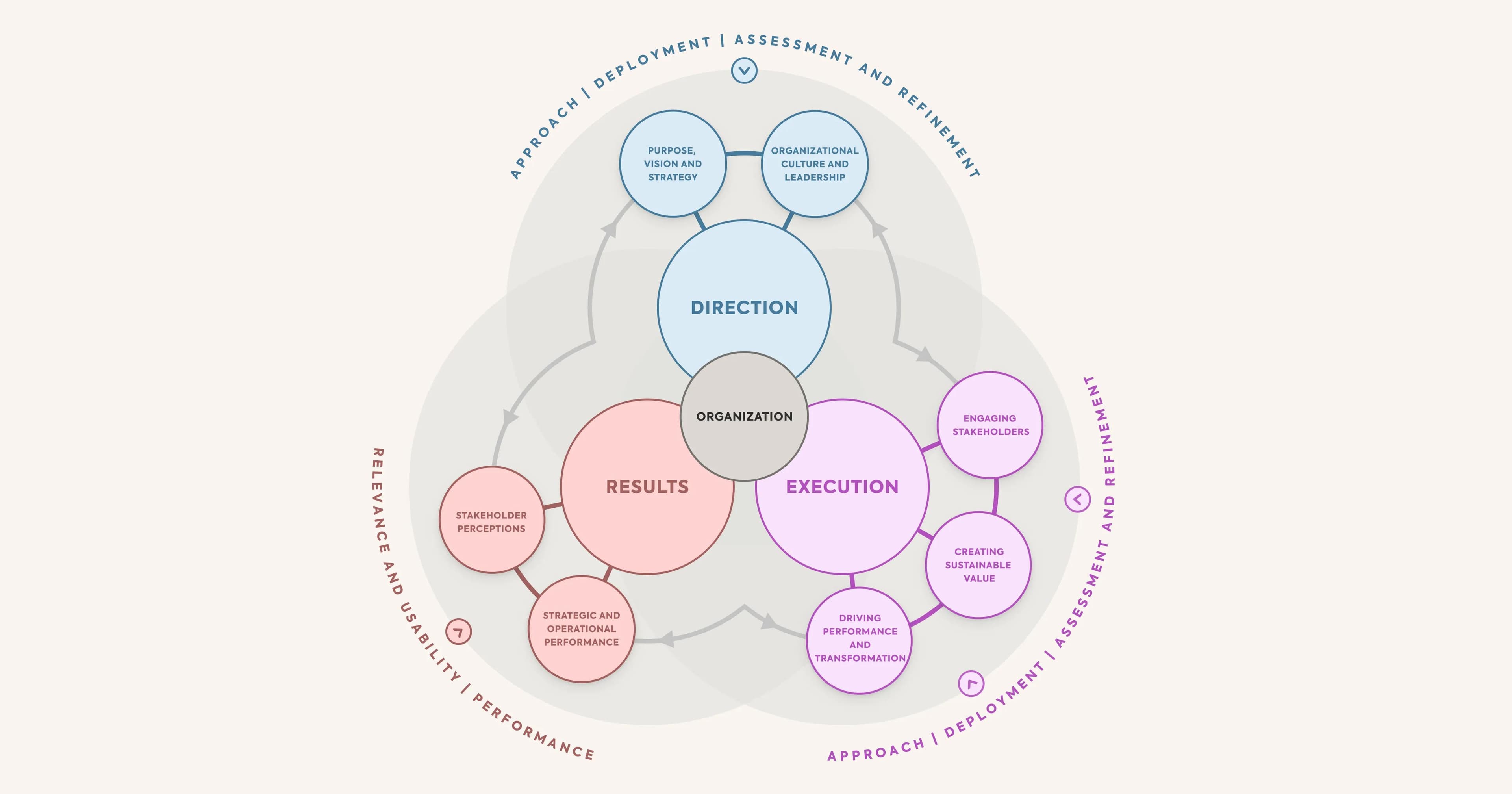
💡 By the way, there are other strategic frameworks that can promote a company's success through strategic goals. In addition to OGSM and OKR, it's also worth taking a look at MBO, Hoshin Kanri, and Balanced Scorecard.
Conclusion: long-term planning with OGSM, short-term flexibility with OKRs
Organizations can plan very well for the long term in the OGSM format, but quickly reach their limits when conditions in the market or within the company change at short notice. To counteract this, it can make sense to combine OGSM with other, more short-term methods for strategic management.
As is often the case in management, a closer look at OGSM reveals that there is no single optimal approach. Each method is suitable for different purposes and comes with its own strengths and weaknesses.
A mix of methods – for example OGSM and OKRs – can help to balance these weaknesses and to approach the optimal solution individually.